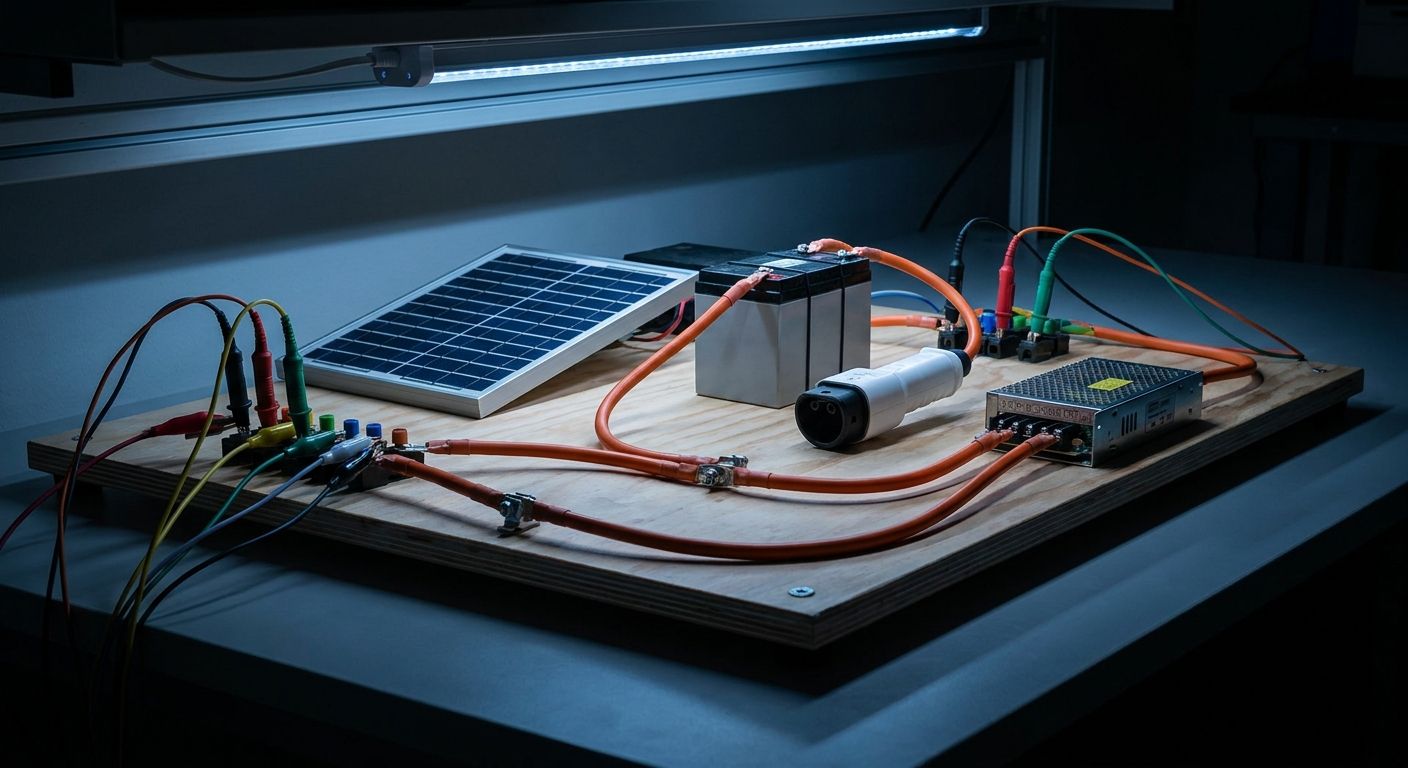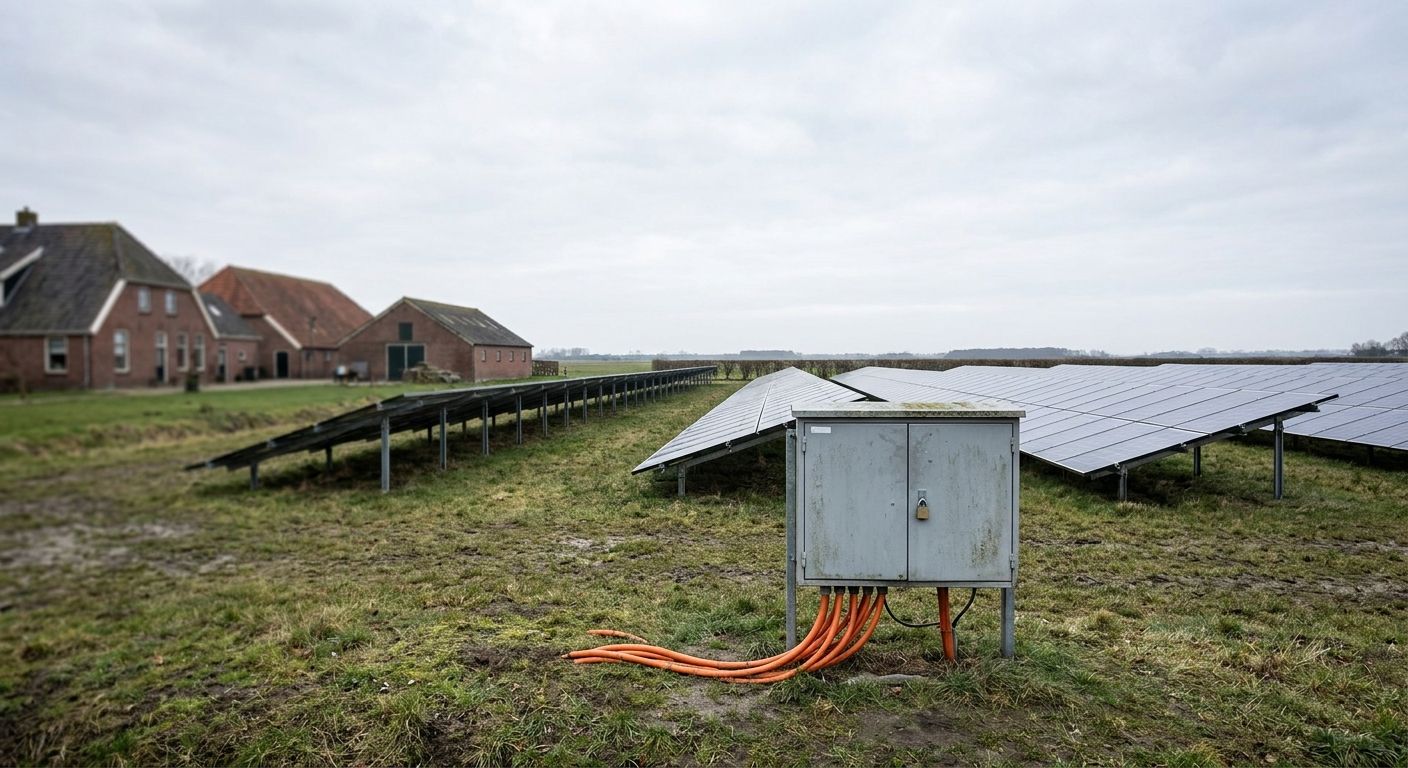
Test setup expanded with a second charging point
The DC network in Delft now serves two charging points alongside the home and storage.
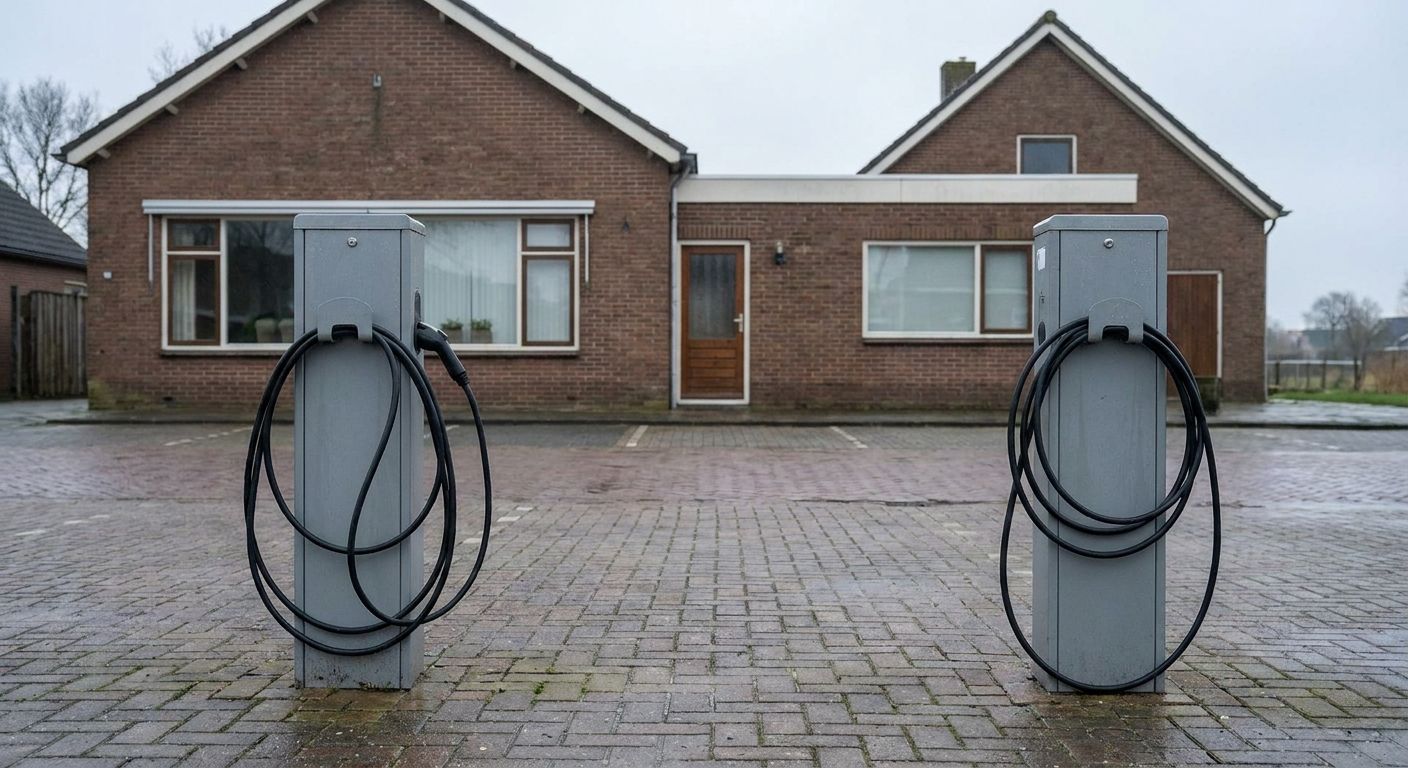
The Delft test rig has gained a second charge point. That lets the rig show something a single charge point cannot: what happens when two large loads draw power from the same bus at once.
Why a second charge point adds something
One charge point is a load. Two charge points are a control problem. When charging simultaneously, something has to decide who gets priority as the sun drops away and the battery heads towards its lower limit.
On the DC ring that decision sits in the bus voltage itself: as the voltage sags, the charge points throttle their current before the battery is pulled flat. No separate communication protocol needed — the physics of the bus is the signal.
That is not free simplicity. The complexity moves to protection and bus control: interrupting direct current takes different equipment than alternating current, and insulation monitoring has to run continuously.
The next step is a measurement series across a number of sunny and cloudy days, to see how often that throttling actually kicks in.